
Emphasizing Humanity in Systems of Inequality and Conflict. Member Spotlight: Sue Mann
Sue Mann’s many accomplishments in her self-described “non-linear path” include being the first woman to lead a South African diplomatic mission in the Middle East, obtaining an MBA from Cornell University, settling down in Ithaca, New York to raise a family, and using what she learned from her many experiences to create her own executive consulting firm.
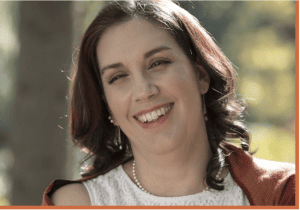
Going back to the start of her journey, Mann came of age in South Africa under the system of apartheid. She “grew up with all of the benefits of white privilege under apartheid,” mentioning one example as having a full-time, live-in housekeeper. However, she always knew, and was taught by her parents, about the gross injustice of apartheid. Her parents had come to the United States when her father did a masters at University of California, Berkeley. They described their time in the US as “the first time they had experienced what a fully integrated, multiracial, society looks like, and the sky didn’t fall and the sun still rose. It the non-apartheid society of the U.S.]works. It’s actually better.” Mann was born in America and thus ended up moving to the U.S. later on easily due to her citizenship.
As a teenager in South Africa during the 1980s, Mann was exposed to the widespread social movement fighting against apartheid. Protests were often violently suppressed by the police and the country’s death count rose exponentially due to the effects of the anti-apartheid struggle. Due to this environment, Mann “learned to question all forms of power and authority. I grew up in an illegitimate regime where the police were not to be trusted, where the government was representing a tiny fraction of the people…” She says she learned the rules weren’t necessarily to be respected or obeyed, since, for one, it would have been illegal for her to marry her future husband due to South Africa’s then race laws forbidding “mixed marriages”.
Mann had just finished high school when Nelson Mandela was released in 1990 and was drawn by her environment and interest to study liberal arts and law at the University of KwaZulu-Natal. She was inspired by learning in real time about South Africa’s political system in Constitutional Law class from professors who were legal advisors to political parties as the political actors were negotiating their post-apartheid, parliamentary, proportional representation system. With advice from a family friend who was a diplomat, she decided to use her skills and follow her interests by pursuing the same path.
She said she believes she was ultimately hired as a diplomat because, in her interview, she expressed a strong belief in affirmative action – specifically, opportunity and proportional representation for the non-white majority who had been denied opportunity and repressed by apartheid for generations. Mann’s belief in affirmative action was so strong because she had lived it. “In my first year, our residence hall was 90% white. In my final year it was 90% non-white. People kept asking me why I wasn’t moving out of res like everyone else. I stayed because, honestly, res life became more enjoyable, not less enjoyable, as the balance shifted.” Mann enjoyed experiencing and learning from the multiculturalism that was emerging.
Mann’s time in the foreign service lasted 8 years, encompassing all of Nelson Mandela’s presidency and Thabo Mbeki’s first term. While working domestically at the start of her service, she chose Arabic as the foreign language she wanted to train in. Before the 1990s, South Africa had mostly maintained diplomatic relationships–including any on-the-ground presence–with Western-aligned nations. After 1994, South Africa’s foreign policy saw a rapid expansion of diplomatic relations with non-Western countries and the establishment of embassies in many other nations, including the Arabic-speaking world. After 2 years of linguistic immersion in Cairo, Egypt, Mann spent 4 years on a diplomatic tour in the newly established South African mission to Palestine in Ramallah in the West Bank. After the return of her head of mission to South Africa, Mann became, at only 29 years of age, the acting head of mission. She served in that position for a year, a span that included the first six months of the Second Palestinian Intifada.
Despite accomplishing meaningful work, all of the demands, death, and violence she was exposed to through her job, as well as a mass increase in non-white representation in the foreign service following the same affirmative action policies she continued to support, Mann decided to move onto other ventures – specifically an MBA at Cornell University – after her posting was complete in April 2001.
After graduating from Cornell University with a double masters degree, Mann entered corporate America, working in banking, finance, consulting, real-estate, energy efficiency and energy. She described this phase as ending because of her “questioning all forms of power and authority doesn’t play out so well in corporate America.” She also started a family and settled down in New York.
Perhaps the most key theme in Mann’s journey thus far is seeing injustice and conflict, from South African apartheid to the Middle East and corporate America, and rallying against it by emphasizing humanity. It is in this vein that she founded Sansu Rising, a consulting business that uses nervous system regulation to improve leadership and management capabilities. She loves being an executive coach because it allows her to change the world through changing its unequal, often faulty systems one person at a time.
Mann has written a book about her adventures in the Middle East, and recently spoke to her Unitarian Universalist congregation about her enduring lessons from that time. Along with three co-founders, she’s now building NeuroLead to bring nervous system regulation practices to teams, leaders and organizations at scale.
Article by Hunter Siegel, MBBI Writer