
Lessons from Cars, Conflict, and Community. Member Spotlight: Alex Raphael
Alex Raphael was born in Chile to a Chilean mother and a German father. His mother, the daughter of a Russian mother and a Romanian father who immigrated to Chile around 1900, and his father immigrated to Chile during the Second World War era. After attending a public high school, he graduated from the University of Chile in Santiago with a degree in engineering.
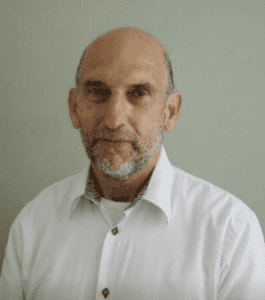 Raphael began his professional career during what he described as the “difficult economic moment” under the authoritarian rule of Augusto Pinochet. His first job was with the government, where he was responsible for ensuring Chile’s water supply. He then worked for a tire recovery manufacturer as an industrial engineer. In that role, he appreciated the opportunity to travel throughout Chile while carrying out vehicle service and maintenance. He later became that company’s operations manager, a position he held for eight years.
Despite receiving several job offers, Raphael took his wife and their two children out of Chile to the Netherlands in search of a change and personal development. His next job was developing new types of specialty conveyor belts. After that company went bankrupt, he worked for Telematica at the beginning of automation in communications in the 1990s. He then worked for a company dealing in secondhand trucks and machinery. Over the course of 20 years, his position rose in the family-run company until he was their “second hand” who advised the family and managed the company’s affairs.
When the owners—the second generation of three brothers—decided to retire and transfer ownership of the company to their three nephews, a major conflict arose. Raphael recounted: “It was very hard for me because I had such a high status and position in the company. I thought I could do something to help solve the problem between the family and I thought I had done that. But then I saw that it was not successful. I went to investigate what had happened in this conflict. I could not understand why there was such a conflict and why the family broke, and that led me to my first contact with the mediation world.” Still working for the company, he entered basic mediation training, of which he said: “My basic training as a mediator was very good for my mind but I could not begin immediately as a professional mediator because it needs a lot of time and effort to market to find customers and establish a practice.” Additionally, he was still working for the company. However, after another few years, he retired due to a new offshoot conflict with one of the founder’s sons.
By the time he finally left his longtime company, he had already begun informally mediating conflicts within his community. It is necessary to mention that in the Netherlands, Raphael described it as quite common for retired people to spend a good amount of what had been time working to devote to their passions and giving back to the community. Mediation and volunteering became Raphael’s later-stage professional passion. Raphael began working as a professional mediator in 2014 and was certified and registered through the official Dutch mediation body the Mediator Federatie Nederland (MfN) in 2017. He is part of a collective of Dutch professional mediators called Mediationhuis – “Mediation House” in English – that mediates all kinds of disputes. Raphael specializes in disputes around families, divorces, immigration, multi-lingual, labor, and corporate-related conflict because he “knows the dynamic and what they are like.” He finds these disputes interesting and is “immensely fulfilled helping these people going through what he has gone through.” He also gives back to communities of Spanish-speaking immigrants – as he and his family had gone through that transition before – by assisting them become settled in between and in addition to the formal governmental integration programs and by mediating any disputes at the organization Casa Migrante. Raphael is happy to still be working with secondhand vehicles at his age. He loves spending time with his wife, 2 daughters, and 8 grandchildren. In particular, they enjoy traveling through the world for months on end.
Raphael’s philosophy is perhaps best expressed as follows: “For what I have done… We have enough in this world to share and be good. We should not have to war, to fight each other, to share goods of the world in a bad way.”
Article by Hunter Siegel, MBBI Writer