
MBBI at the Strong Cities Network Mayoral Retreat: Building Trust as Civic Infrastructure
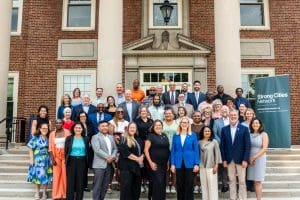
Mediators Beyond Borders International (MBBI) President and CEO Prabha Sankaranarayan joined mayors, deputy mayors, city officials, and community leaders from across the country at the Strong Cities Network’s Third Annual US Mayoral Retreat in Pittsburgh earlier this month. The day’s conversations centered on a shared challenge: incivility, hate, and threats to social cohesion are no longer abstract policy concerns but daily realities that local leaders are managing on the ground.
Now in her third year attending the retreat, Sankaranarayan noted the value of returning to a growing community of familiar faces and new partners in Pittsburgh. MBBI’s TRUST Network connects and supports mayors across the country, and MBBI’s global network of mediators works in cities around the world, making Strong Cities a natural and valuable partner. We also offer a Global Peacebuilder Certificate program to equip local peacebuilders with broad, comprehensive training in peacebuilding and collaborative processes. Our multidisciplinary, multicultural practitioners provide practical tools and skills that enable collaborative processes in personal, professional, and international contexts.
A line from the retreat’s mayoral keynote captured the day’s central theme: mayors, the speaker said, are “chief civic infrastructure officers.” Communication is infrastructure, and listening is maintenance. Transparency is the inspection process that catches problems before they become crises. Community partnerships provide the redundancy that keeps a city standing under strain. Civic trust, in other words, isn’t something that simply happens; it has to be built and maintained, the same way a city builds and maintains a bridge.
That framing echoed throughout the day’s sessions. Mayors including Bob Dandoy (Butler, PA), Steve Patterson (Athens, OH), and Katrina Thompson (Broadview, IL) described absorbing the fallout when their cities become flashpoints. Whether from national attention after a crisis, the strain of new data center development, or community response to ICE enforcement. They did it all while keeping basic services and public trust intact.
Women mayors and deputy mayors, including Lakeesha Eure (Newark), Theresa Rich (Farmington Hills), and Nancy Rotering (Highland Park), spoke candidly about the escalating threats and violence they face simply for serving in office, and about the mental health support, mentorship networks, and daily check-ins that have become essential parts of how they lead and protect their teams.
Pittsburgh’s own nonprofit and city leaders offered a further throughline. It is deep, patient relationship-building, not any single program or policy, that carries communities through moments of real strain.
Across every panel, the message was consistent: local decision-making starts with mayors and the officials closest to residents. They are the ones translating national tension into local resilience, often while under direct, personal threat. Investing in their safety, their support systems, and their ability to build trust locally is not merely a nice-to-have. On the contrary, it is foundational to community safety and cohesion everywhere.
MBBI thanks the Strong Cities Network and host Pittsburgh Theological Seminary, along with City of Pittsburgh leadership, for a retreat that reaffirmed why partnership between peacebuilders and local government is so essential to strengthening civic trust during these times.