Under the Palaver Tree: Human Rights, Mediation, and Peacebuilding. Member Spotlight: Ahmed Tazief Njoya
In many African communities, disputes were once settled beneath the arbre à palabres, the palaver tree, where the parties would gather with the chief to talk until they found a way forward. For Ahmed, a Cameroonian human rights specialist and Qualified Mediator from ADR Institute of Canada now based in Canada, that image captures something essential about peacebuilding: “Sometimes the most effective methods are the most simple.”
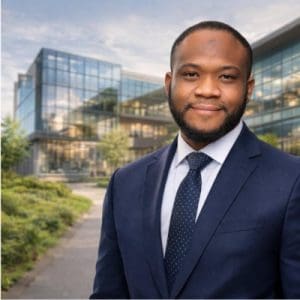 Ahmed brings more than 13 years of experience with the United Nations and international non-governmental organizations to his work, most of it in Central and West Africa. He was drawn to Mediators Beyond Borders International because its model is locally led and globally supported. MBBI, he noted, does not arrive with ready-made answers. It builds capacity and accompanies communities, an approach that mirrors his own values and his experience with organizations such as the United Nations Office of the High Commissioner for Human Rights (OHCHR).
Ahmed’s path began with a master’s degree in human rights, where he first studied mediation as part of a course on alternative dispute resolution. Internships with organizations including the Red Cross set the direction of his career, and in 2014 he began working with the International Foundation for Peace, Human Rights, and Development. He went on to serve for four to five years as a human rights specialist with the United Nations, working primarily in Cameroon through the UN Centre for Human Rights and Democracy in Central Africa, the International Organization for Migration, and with partners such as Plan International. He later completed a PhD in development and humanitarian project management in Mumbai.
In the field, he saw a recurring gap. People often knew their rights, but lacked safe and constructive ways to resolve the conflicts around them. Human rights, he explains, provide the normative framework of equality, participation, and accountability set out in international conventions. Mediation adds something more: a practical process for addressing grievances, rebuilding trust, and preventing violence.
One of the central ideas Ahmed brings to his practice is the importance of understanding the circumstances surrounding a conflict.
He describes this through the human-rights-based concept of intersectionality: factors such as gender, age, disability, indigenous status, education level, and whether someone lives in an urban or rural environment can fundamentally shape how they experience a dispute and what solutions are possible, since challenges facing communities can look very different depending on where they live. In rural communities, Ahmed points to issues such as access to natural resources like clean water as well as basic social infrastructure like health facilities. Urban communities may face different pressures, including employment and housing.
These differences matter when designing a mediation process.
Traditional and religious practices may play an especially important role in rural communities, for example, requiring mediators to understand and account for local institutions and norms. The same approach cannot simply be transplanted into a different setting and expected to work in the same way.
“Whenever we use mediation as a tool, we should always have in mind the fact that we should adapt or contextualize our mediation to make it more effective,” Ahmed says.
For Ahmed, contextualization also means recognizing when mediation is not appropriate. In situations involving severe coercion or ongoing violence, he emphasizes that mediation may not be the right tool and that judicial or administrative authorities may need to intervene.
Ahmed’s approach is particularly attentive to power imbalances. He recalls working on a girls’ education project in a community where traditional expectations gave boys greater priority in accessing education. When a girl involved in the project wanted to continue her education through university, the dispute illustrated how deeply power can shape whose interests are heard.
As the team’s mediator, Ahmed used the mediation process intentionally to address that imbalance. Sometimes that meant separate caucuses—meeting privately with each party when communication between them was difficult. He would also establish clear ground rules and ensure that the marginalized party had space and support to speak. In multilingual communities, interpreters could also be necessary to ensure that language did not become another barrier to participation.
Ahmed’s advice to emerging mediators and peacebuilders reflects the philosophy that has shaped his own career.
First, he encourages practitioners to remain curious.
“We should not be certain of nothing,” he says. “Nothing is absolute.”
That means continuing to study human rights, conflict analysis, and mediation while remaining open to learning from every community and situation. It also means cultivating humility. Ahmed warns of what he calls “savior bias”—the tendency for practitioners to see themselves as the person who has arrived to solve a community’s problems. That mindset, he argues, can ultimately mislead both the practitioner and the people they are trying to support.
As Ahmed looks across the different places where he has lived and worked, he describes himself as a “global citizen.” His experience has reinforced his belief that peacebuilding requires both technical skill and an openness to learn from others.
And perhaps most importantly, he sees peacebuilding as a long-term commitment.
“Peacebuilding is a marathon, not a sprint,” Ahmed says.
For practitioners willing to remain curious, humble, locally grounded, and committed to relationships, that marathon can become not only a professional calling, but a lifelong practice of helping people find safer and more constructive ways to live together.
Article by Aaminah Tabassum, MBBI Writer