
Trauma and Recovery: The Human Work of Peace. Member Spotlight: Liyam Eloul
Liyam Eloul’s work begins with a question that refuses to settle. How do people continue to live, relate, and rebuild after conflict reshapes the way they see the world, themselves and each other? It is a question that has guided her across disciplines and borders, shaping a career that sits at the intersection of psychology and peacebuilding.
Now based in Los Angeles but originally from Arizona, Liyam’s path has been shaped by movement. She trained in cross-cultural psychology at Queen’s University and later worked at Stanford’s Mind Culture and Psychology, and Race Labs, where she began examining how culture and social class shape experiences and expressions of trauma. In the aftermath of Hurricane Katrina, her work explored how different communities processed loss and disruption. It was an early glimpse into a question that would come to define her career: how do people make sense of suffering together?
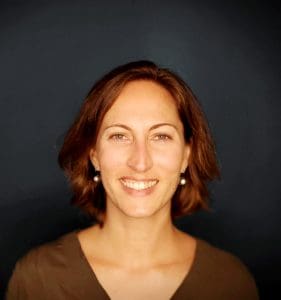 That question followed her across continents. As a Fulbright scholar in Oman, she studied the collective experience of distress after severe damage following Cyclone Gonu. In Cairo, she pursued postgraduate studies, deepening her engagement with the psychosocial impacts of conflict and displacement. Eventually, her work brought her to Syria and the broader Middle East, where she spent years as a clinician working closely with displaced communities. “I’ve had an interest in the long-term impact of conflict on social bonds, mental health and human development,” she says. “You start to notice cycles in trauma exposure and how this shifts the way we interact with others. It overemphasizes our threat perceptions and sets us up for recurring violence.”
For Liyam, those patterns were not abstract. They were visible in everyday interactions, in the way fear and distrust lingered long after violence had passed. Working with refugees in Syria, Jordan, and Lebanon, she began to see a deeper relationship between psychology and peacebuilding. “The connection became very clear,” she explains, “as did the need for work that integrated approaches from both fields.”. What had begun as an academic interest in trauma became a practical commitment to addressing its broader social consequences.
Since 2020, that commitment has been centered primarily in Ethiopia. Following the outbreak of conflict there, Liyam has worked alongside local organizations to support communities navigating the aftermath of violence. Her approach is grounded in a socioecological perspective and in liberation psychology, a framework that emphasizes social justice and community-based healing, which she was introduced to while working with psychosocial peacebuilders in Colombia. It marked a turning point in how she understood mental health work. “It helped shift my perspective on the purpose of treatment,” she says. “It’s not just about individual wellbeing. It’s about communities and systems.”
Her work in Ethiopia spans multiple layers. She collaborates with civil society organizations on transitional justice efforts, helps develop trauma-informed approaches to documenting human rights abuses, and supports programs aimed at repairing social cohesion, such as trauma-informed education systems. In classrooms, this sometimes means working with teachers who themselves took part in the conflict. “We’re looking at how to interrupt cycles of violence,” she explains, “including teaching regulation skills to people who are now shaping the next generation.”
Central to her approach is narrative therapy, which helps individuals and communities reframe their experiences without reinforcing cycles of dehumanization. The goal is not only to support healing, but also to restore a sense of agency. “We’re looking for the empowerment of survivors in the process,” she says, emphasizing the importance of moving from a position of victimhood toward one of resilience.
When Liyam speaks about peace, she frames it as a continuum. “Peace can be defined on a scale,” she explains, “from basic stability and an absence of violence to a sense that the community is functioning healthily.” At its core, peace is relational. “People need to feel safe enough to connect with each other. You need physical and psychological safety to engage and function well in your roles.”
Yet achieving that kind of peace, however, is rarely straightforward. One of the most persistent challenges she faces is fostering sustainable change. “Peacebuilding on a lasting level requires coordinated effort across many actors at multiple levels of society, not just high-level decision-makers,” she says. Progress is often hard to measure, and mobilizing fragmented communities to engage collectively can be difficult, especially in contexts that remain unstable and resource-limited.
Rebuilding connection is perhaps the hardest part. “The rehumanization and reconnection is extremely challenging,” she says. In deeply divided communities, people often see each other through an oppositional lens. Her work seeks to create opportunities for something different. “You have to give people opportunities to see each other as human, as ‘like me’” she explains, “and move away from a defensive, dehumanizing perspective.” The process often begins by identifying shared experiences and values. “Take it down to the human level,” she says. “That’s where change can start.”
Success, in this context, is not the absence of conflict. “Conflict is always going to happen,” she says. Instead, she defines success more subtly. “Success is when individuals or communities are able to navigate conflict constructively, based on a shared sense of humanity.” It is about how people engage with one another, even in moments of disagreement.
That approach carries into how she builds trust with communities. “It starts with openness and humility,” she says. “You have to hold space for the experiences of the person you’re talking to.” This often means stepping back from one’s own assumptions and making space for perspectives that may be uncomfortable. Trust, she emphasizes, is not built quickly. “It’s an ongoing, continuous process.”
Within that process, certain voices play a particularly powerful role. Women, she notes, are central to many of the communities she works with. “Women have a unique vulnerability and a unique resilience,” she says. Their experiences often position them as connectors across divides. “When women are able to engage in peacebuilding, they often bring a heterarchical style. There’s an empathic quality of shared social roles and common experiences that allows them to connect with women on different sides of the conflict.” That shared ground can become the foundation for broader reconciliation. “Women can be so powerful within peacebuilding,” she adds.
At the same time, Liyam is clear that peacebuilding does not happen in isolation from existing political systems. “Dominant leadership has a louder voice,” she says. “It sets the narrative and decides whether that narrative is going to be dehumanizing or not.” From a socioecological perspective, individual and community healing and national discourse are deeply intertwined. The rhetoric and policies of those in power can either deepen division or create space for connection — and that dynamic shapes what is possible on the ground.
Her own understanding of conflict has evolved over time. Growing up, she describes herself as conflict avoidant. That began to shift during her training. “It was eye opening to realize that conflict could be an opportunity,” she says. Now, she sees it as something that can foster growth when approached differently. “It’s not that we will never have conflict, but how do we shift the way we respond so that it becomes beneficial for the collective?”
Despite the challenges, Liyam speaks about her work with a sense of grounded hope. That hope does not come from large scale agreements or sweeping policy changes, but from the choices she witnesses in everyday life. “I’ve seen so many instances where individuals are making choices that are scary,” she says, “rebuilding trust and rebuilding communities.” Those moments, often quiet and unrecognized, are what sustain her. “One of the benefits of my work is being exposed every day to the ways people connect with each other, showing such courage and resilience.”
Article by Shamailah Islam, MBBI Writer