
From Faith to Facilitation. Member Spotlight: Onell Gomez
Onell Gomez is based in Trinidad, where her work in mediation and peacebuilding is deeply shaped by her faith in God, her commitment to children, and her desire to create lasting social change. From an early age, Ms.Gomez knew that helping others, especially children, was central to who she is. “I’ve always enjoyed helping people,” she shared. This passion manifested in her work within the church, where she serves as a Sunday school superintendent and works closely with young people. Eventually, that early interest led her to study sociology, with a particular focus on children and social well-being.
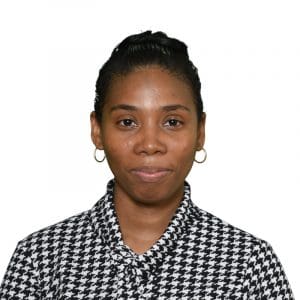 For Onell, working with children is not simply a professional interest but a calling. She explained that she is “passionate about working with children” and firmly believes that “by working with children we can create positive changes in society.” She finds fulfillment in shaping young lives, stating that “molding and shaping their lives is fulfilling to me.” Grounded in Christian principles, her work reflects a strong moral foundation that influences both how she approaches conflict and how she envisions peace.
Onell was introduced to mediation while working with a poverty reduction programme, an experience that exposed her to alternative ways of addressing conflict. She describes mediation as “an alternative way of dealing with conflict,” one that resonated with her values and her desire to advocate for children’s best interests. Motivated to deepen her understanding, she completed both a postgraduate diploma and a master’s degree in the field. Her master’s thesis focused on five (5) secondary schools in Trinidad, where she examined the effect of empathy on aggression, prosocial behaviour and conflict resolution among adolescents. This research reinforced her belief that children have the capacity to learn constructive ways of dealing with conflict when they are given the right tools and guidance.
Currently, Onell works primarily in family mediation, handling matters such as access, custody, and maintenance. Much of her work involves supporting parents as they attempt to reach solutions that prioritize their children’s well-being. She emphasized that her role is not to impose outcomes but to empower parties, noting that “in mediation people are given the opportunity to speak and empower themselves.” For Ms. Gomez, each case is unique. She approaches every matter on its own merit while upholding what she described as the importance of “maintaining the human dignity” of everyone involved.
Her approach to peacebuilding is closely tied to her Christian faith. “who I am is a big part of what I do,” she explained. Christian values shape the calmness and genuineness she brings into mediation spaces. She strives to connect with parties by building rapport and creating a safe environment where individuals feel heard and respected. “I try to bring my values when I do this work. I do it from a place of genuineness,” she said. This emphasis on connection allows her to engage parties in meaningful dialogue, even in emotionally charged situations.
When asked how she defines peace, Onell offered a deeply spiritual perspective. “When I think about peace, I think of the peace of God, a peace beyond understanding,” she reflected. For her, peace is not simply the absence of conflict but an active process of healing. “It’s more than the absence of conflict. It’s about restoring what was broken. It’s bringing restoration.” This understanding guides her mediation practice and reinforces her belief that reconciliation and understanding are possible, even in difficult circumstances.
Onell also acknowledged the challenges she faces in this field. One of the challenges, she noted, is facilitating parties to consider and understand each other’s perspective. In addition, the dynamism and complexity of modern societies are such that mediators must navigate a wide range of values, beliefs, and lived experiences. She explained that understanding these differences requires patience and openness. To navigate challenges, she relies on reflection, asking herself what worked and what could be improved. As someone still relatively new to the field, she is actively developing her mediation style and recognizes that “this work takes patience, both with the parties and the process.”
Success in mediation, for Onell, is measured not only by formal outcomes but by sustainable change. “When the parties are negotiating and when they don’t have to return to the court system to resolve their issues,” she considers that a meaningful success. She is especially encouraged when parents are able to communicate independently and resolve conflicts without external intervention. Beyond mediation rooms, she measures change through her work with children. Seeing children grow, develop positive characteristics, and internalize values through mentorship reassures her that progress is being made. “When I see certain characteristics in kids, I know that there is change and that we are making a difference,” she said.
Building trust is central to Onell’s work with both communities and mediation participants. She emphasized the importance of being genuine and consistent, which helps create a nonjudgmental space. She also highlighted practical strategies for maintaining neutrality, such as clearly stating at the outset that the mediation space is free from judgment, using neutral language, and ensuring that all parties feel balanced and respected.
Over time, Onell’s understanding of conflict and peace has evolved. Initially drawn to family mediation, she became more aware of the complexity of family dynamics and the lasting impact conflict can have on children. This realization strengthened her belief that adults must model healthy conflict resolution. “If we want a positive change, we need to emulate how we deal with conflict for children,” she explained.
Looking ahead, Ms. Gomez finds hope in the opportunity to teach and work with young people. “The kids are the future,” she said, adding that teaching children Christian values can build their capacity to manage conflict later in life. She firmly believes that “every small thing done towards peacebuilding will have an impact.” Her future goals include expanding mediation opportunities in Trinidad and further honing her skills. She is particularly excited about an upcoming presentation on peer mediation and her role as a facilitator teaching children these skills. Through her faith-driven approach, commitment to children, and dedication to mediation, Onell Gomez embodies a vision of peacebuilding rooted in empathy, restoration, and hope for future generations.
Article by Shamailah Islam, MBBI Writer