
Crossing Cultures, Building Peace. Member Spotlight: Maciej Witek
Maciej Witek’s life is not best understood as a straight line, but rather as a series of crossings. Between Poland and Japan, academic research and grassroots community work, personal ambition and service to others, he has come to understand that peace is rarely built through grand gestures. More often, it grows quietly through dialogue, patience, and the willingness to see the world from another person’s position. These lessons, gathered over more than a decade of movement and reflection, now shape his work in peacebuilding, education, and local social action.
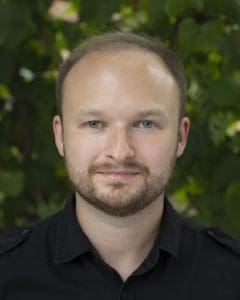
Originally from Poland and currently based in Tarnów, Maciej has spent much of the past decade moving between Poland and Japan. From 2021 to early 2024, he was also known to many as a writer for MBBI, though his story began earlier. He studied cultural studies at Polish-Japanese Academy of Information Technology in Warsaw before taking part in a student exchange program in Japan in 2016. That experience became a turning point. “I gained so much from this cross-cultural exposure, and later wanted to somehow help people become aware that their lifestyle isn’t the only one to exist,” he explains. Exposure to a different cultural reality challenged his assumptions and sparked a lasting interest in intercultural dialogue.
He eventually returned to Japan in 2018 to pursue a master’s degree in international relations at Tokyo International University, focusing on political and cultural relations between states. Japan became not only a place of study, but a living classroom. He was especially struck by the subtleties of communication and the importance of trust. “Japan is based on two things,” he says. “Your true feelings and what you show people.” He observed how diplomacy extends into everyday interactions and how relationships are built slowly and carefully. “It takes time to gain people’s trust, and it is very easy to lose it,” he adds. Despite cultural differences, he found that sincerity remained a universal language. “If you have good intentions, people will be open to you.”
One of Maciej’s early personal goals was to work at the Tokyo 2020 Olympic Games. After quitting university earlier in life and later returning to his studies, this goal symbolized persistence and self-belief. He eventually achieved it and even gave a TED Talk about the journey. Yet reaching that milestone did not feel like an ending. “I reached my goal, and now it was time to give something back to the world,” he says. That realization became central to his understanding of peacebuilding. “We should put more effort into inspiring people and encouraging them to pursue their own goals,” he adds, seeing empowerment and education as essential components of peace.
His academic path increasingly intersected with difficult realities. During his studies in Japan, Maciej visited refugee detention center and spoke with people being held there. The experience left a deep impression. “Sitting and talking with people in detention was a shock,” he recalls. The conditions were harsh, and many detainees were trapped in legal limbo, unable to return home. Even though he learned about those conditions through research, it was a different story to actually witness them. “Nobody becomes a refugee because they want to,” he says. These encounters strengthened his commitment to centering human experience within political and security debates.
Another major step in his journey came with the Rotary Peace Fellowship, at the International Christian University Peace Center from September 2023 to August 2025. As a Peace Fellow, he conducted research on securitization. His work explored the selective securitization and desecuritization of refugees in Poland between 2015 and 2024, focusing on the contrasting treatment of Afghan and Ukrainian refugees. It examined how political leaders, media, and segments of civil society constructed divergent narratives that framed specific groups as a security threat. He is particularly interested in bottom-up de-securitization and how local dialogue and education can change perceptions. “The best thing we can do is promote dialogue on the local level,” he says. He believes many conflicts persist because people lack the skills to engage in meaningful conversation. “We do not have enough skills for dialogue, and that is the basis of many conflicts.”
After the Tokyo Olympics, Maciej spent two years in his hometown in Poland. This period grounded him locally and reshaped his priorities. He worked for a Polish NGO supporting children and foster families, where he also returned last summer after completion of his Peace Fellowship. “I believe peace starts in our local communities,” he explains. Rather than focusing exclusively on global systems, he chose to invest in work he could directly influence. The current major NGO’s project “Sercodajni” (Heartgivers), aims to create a house for young adults aging out of the foster care system, provide guidance to start independent adult life, and offer mental health support. One of the biggest challenges, he notes, is funding. “Convincing people why investing in people matters is often harder than expected,” he says. On top of that, Maciej is partnering with Glocal Youth Partners, a community volunteering organization from Mitaka in Japan, to bring youth from Poland and Japan together through online (and one day in-person) education and cultural exchange projects.
For Maciej, peace is not a fixed concept. “Peace is constantly being developed and changed,” he explains. Different moments demand attention to different dimensions, whether human rights, economic stability, or social cohesion. Education, he believes, remains central. “Education is the key to peace,” he says.
Despite the challenges of limited funding and institutional barriers, Maciej remains hopeful. What sustains him is the growing network of people committed to peacebuilding. “There are people who care only about their own benefits, but at the same time, there are so many inspiring individuals who genuinely want to change the world,” he says. Looking into more distant future, he hopes to return to academic life and pursue doctoral studies.. He also plans to obtain mediation certification and develop practical programs that support dialogue and de-securitization at the community level.
For Maciej, peacebuilding is not an abstract ideal. It is a daily practice rooted in listening, education, and sustained commitment to people, whether in refugee detention centers, foster care homes, or local communities. Change, he believes, begins close to home and grows outward through understanding.
Article by Shamailah Islam, MBBI Writer