
From Conflict to Consensus. Member Spotlight: Radwan Ziadeh
Radwan speaks quietly, but with the certainty of someone who has lived through the consequences of conflict and still believes in dialogue. Originally from Syria, he fled the country in 2006 and moved to the United States in 2007, carrying with him the weight of a homeland already beginning to fracture. Distance did not dull his connection to Syria; instead, it sharpened his understanding of what the country was losing as it descended into violence. Over time, Radwan earned a certification in mediation; not as an academic exercise, but as preparation for what he hoped would one day be possible.
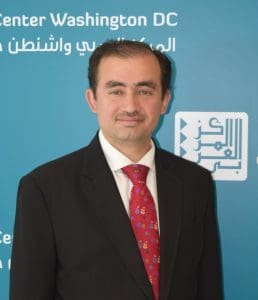 That possibility became real in 2024. Following the fall of the Assad regime after fourteen years of civil war, Radwan returned to Syria with a clear purpose: to help create spaces for dialogue in a society deeply scarred by violence, mistrust, and division. He began conducting mediation workshops in Damascus and expanded to other Syrian cities known for their mixed religious and ethnic communities.
“Syria has mixed cultures and religions,” Radwan says. “Consensus is key for stability in the long term.”
His path into peacebuilding was shaped by years of watching his country unravel. Syria’s civil war left behind mass killing, mass torture, and the systematic destruction of institutions and trust. The conflict was not only violent but also deeply dramatized, with rigid narratives that hardened identities and made compromise seem impossible. For Radwan, mediation and peacebuilding emerged as practical responses to this reality rather than abstract ideals.
“Transitional justice is key,” he explains. “You cannot move forward without addressing what happened, and without creating a consensus around different understandings of the past.”
Mediation, in Radwan’s view, does not mean erasing disagreement. Instead, it creates a shared space where disagreement does not automatically lead to violence. “Mediation is a way of communicating between the people,” he says. “It puts groups close to each other and helps them find other ways other than violence.” Conflict, he adds, is inevitable, but societies must build systems that resolve it peacefully and sustainably.
One formative experience continues to shape how Radwan approaches his work today. In 2014, at a moment when Syria’s future seemed especially bleak, he helped bring together opposing political parties to work on what became known as the Syria Transition Roadmap. For an entire year, representatives with profoundly different visions negotiated the structure of a transition government and a pathway toward democracy.
“Ten years later, we are still trying to create consensus about the steps in this roadmap,” Radwan reflects. The process taught him that peacebuilding is measured in decades, not months, and that consensus-building is as important as any final document.
Today, Radwan’s work focuses primarily on mediation inside Syria. He works with ethnic and religious groups that have lived side by side for generations yet remain separated by fear, trauma, and unresolved grievances. His mediation sessions are designed to allow people to speak openly, listen to one another, and begin articulating a shared vision for the future.
“Peace, for me, means long-term stability,” Radwan says. “It means that different fabrics of society can live together in peace, and that people are committed to achieving something very important for their own population.”
The challenges are immense. “Human beings are very complicated and sophisticated,” he says. “Mediation is not the right approach if the situation is not neutral, especially if one side is using violence.” Post-conflict environments require patience, continuous outreach, and deep sensitivity to power imbalances and historical wounds.
Local dynamics heavily influence his strategy. Syria’s history, culture, and politics have created layered identities that cannot be ignored. “Everyone has a very complex identity,” Radwan explains. “You have to be aware that the human being is a complicated creature.” Building a national identity, he believes, is essential to preventing renewed conflict. He points to post–World War II Japan and Germany as examples of countries that rebuilt stability through shared national purpose, and to Switzerland as a model of coexistence among diverse linguistic, ethnic, and religious groups.
“When nations do not have a national identity, that is when they are prone to civil war,” he says. A shared identity, he adds, supports not only peace but also long-term economic growth and social resilience.
Technology presents another paradox in his work. “Social media started as a beacon of hope,” Radwan says. “It helped people connect with each other.” During the early years of the uprising, it gave many Syrians a sense of possibility and global connection. Over time, however, it has also become a source of misinformation, hate speech, and division. While social media offers freedom of expression, it can deepen polarization and undermine trust. With legal boundaries and education, Radwan believes it could be redirected into a tool for peacebuilding rather than conflict.
When asked what success looks like in peacebuilding, Radwan resists simple definitions. “Nobody can define success,” he says. “People have different opinions.” For him, success depends on two things: long-term stability and a shared societal belief that conflicts can be resolved peacefully rather than through violence.
Measuring progress in Syria is particularly difficult after more than sixty years of dictatorship that shaped political behavior and cultural norms. “This requires generations and generations to build these changes,” Radwan says. Elders play a critical role through wisdom and lived experience, while young people bring new ideas, energy, and urgency. “Youth are the ones who bring change to the country,” he says. “They have ideas and dreams. Youth are agents of change.”
Women and marginalized groups are central to his vision of peacebuilding, especially in post-conflict societies. Often among the most affected by war, they are also essential to rebuilding trust and social cohesion. Excluding them from transitional policies, Radwan argues, leaves reconciliation incomplete.
Radwan also sees politics and mediation as deeply interconnected. Clear political goals and inclusive strategies help articulate a shared vision and support peacebuilding efforts. While politics often carries negative connotations due to self-interest and corruption, he insists that both politics and mediation ultimately depend on public trust and participation.
“Peace requires a lot of hard work on the ground,” Radwan says. “Mediation bridges the gap between people who may agree with you and those who do not.”
What gives him hope is the new generation of Syrians. Many have known nothing but authoritarian rule and war, yet they continue to believe in the possibility of a better future. Their resilience and determination fuel his commitment to the long, difficult work ahead.
Looking forward, Radwan hopes to expand his mediation efforts across Syria and help transform the country into a success story of multi-ethnic and multi-religious coexistence. His vision remains steady: softening conflict, confronting the past honestly, and allowing consensus to grow, one conversation at a time. To learn more about Radwan and explore his exceptional work, visit his website.
Article by Shamailah Islam, MBBI Writer