
Holding Space for Change: Conflict, Trauma, and Human Connection. Member Spotlight: Andrea Bassin
Andrea Bassin joins the conversation from Santa Fe, New Mexico, where the desert landscape feels both grounding and expansive, much like the work she has devoted her life to. A mediator, restorative justice facilitator, and trauma-informed psychotherapist, she has spent decades exploring how people can move through harm and conflict toward something more human, more connected. Her work sits at the intersection of dialogue and healing. As she explains, she seeks to “combine restorative justice work and facilitation with trauma informed psychotherapy,” bringing together practices that acknowledge both the emotional and relational dimensions of conflict.
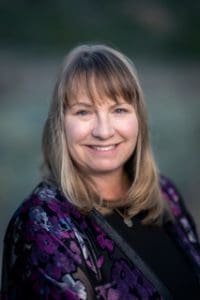 Her path into this work was deeply rooted in curiosity about people and culture. Early in her academic life, she was drawn to Latin American history and culture, pursuing both her bachelor’s degree and her first master’s in that field. At the time, she did not yet know how that interest would evolve into a lifelong commitment to peacebuilding. What she did know was that she was fascinated by how people relate to one another, especially in moments of tension. She recalls being “drawn to the capacity to have conversation and repair what might be creating the conflict rather than forcing the conflict to go one way or another.”
The turning point came in the mid 1990s. While in graduate school, she came across a newspaper advertisement calling for people to take part in mediation training for neighborhood disputes. “There was an ad in the paper in 1995 or 96 asking for mediation training for neighborhoods,” she says. Intrigued, she signed up for the 40 hour training. That decision would shape the rest of her career. “I fell in love with it, and decided that’s what I wanted to do.”
From there, her work expanded into restorative mediation, particularly with youth. She pursued a second master’s degree in conflict resolution at George Mason University, deepening her understanding of how structured dialogue could address harm in meaningful ways. One of the most formative experiences during this period was her involvement, alongside an attorney, with efforts connected to the Truth and Reconciliation process in South Africa. Witnessing that work firsthand left a lasting impression. “Restorative justice, we can do healing in a way that has opportunity for understanding and clarity and a level of healing I’m pretty committed to,” she says. The depth of connection she saw in those spaces continues to inform how she approaches her own practice.
Over time, Andrea’s work brought her into some of the most difficult environments, including mediation efforts related to violence within the prison system in New Mexico. It was there that she began to more fully understand the role of trauma in shaping behavior and conflict. That realization pushed her to expand her skill set into trauma-based psychotherapy. The integration of these approaches became essential. Conflict, she saw, was rarely just about the surface issue. It was often rooted in deeper experiences that needed to be acknowledged before any meaningful resolution could occur.
At the core of her philosophy is a simple but demanding principle. “With mediation and peacebuilding, you are using the dialogue to facilitate the opportunity for each person to be understood more deeply, and thereby, creating more empathy between the parties. With empathy you can find long-term solutions.” For Andrea, the process is not about imposing outcomes but about creating space where people can articulate what matters to them and feel genuinely seen.
Her definition of peace reflects this relational focus. “It is the opportunity to have understanding about each other,” she explains. In her view, peace is not the absence of conflict but the presence of safety and openness. “We don’t feel peaceful in a situation where we have to protect ourselves.” Peaceful communication, she adds, “means you have the opportunity to understand the other,” even when perspectives are shaped by very different personal experiences.
Despite the value of this work, Andrea is clear about the challenges it faces. “Peacebuilding, mediation, is still relegated to the sidelines,” she says. Too often, systems default to force, law, or other rigid approaches under the assumption that they will be effective. By the time mediation is considered, conflicts may have already escalated significantly. This reality can make the work more difficult, but it also reinforces her belief in its importance.
Cultural, historical, and political dynamics inevitably shape how conflicts unfold, yet Andrea returns again and again to a shared foundation. “Ultimately we are all human and we all have the same human needs,” she says. When those needs are obscured by division, the work becomes one of peeling back those layers. “If you can peel back the ideas that divide us, and focus on the human element of what we are, we can create success.” Even partial agreement, she notes, can be powerful. “If we can agree that everyone deserves certain things we can agree on that.”
Success in her field is not defined by a single outcome. Instead, it depends on the people involved and what they are seeking. “Less so on the facilitators and more so on what the people you are working with want to achieve,” she explains. Those goals can shift throughout the process, requiring flexibility and responsiveness.
Building trust is central to making any of this possible. For Andrea, it begins with presence. “It has a lot to do with showing up consistently without judgement but with curiosity,” she says. People need to feel that the person guiding the conversation can hold its complexity. They also need to feel respected, with their dignity intact. Her background in trauma work has strengthened her ability to create that kind of space.
At the same time, she is candid about the personal toll of this work. “This work is never ending,” she says. Exposure to others’ pain can lead to secondary trauma, burnout, and compassion fatigue. “We are mediators but we are not superheroes with teflon,” she adds. Recognizing these limits is essential. For her, that means cultivating balance, maintaining connections outside of work, and allowing time for rest and reflection.
Her perspective on conflict has evolved over the years. Early on, she believed strongly in mediation as a universal solution. “When I first began I was a little naive and believed that mediation and conflict resolution was the answer to everything,” she reflects. Now, she holds a more nuanced view. While she still believes in its potential, she acknowledges that it is not always appropriate. Power imbalances and issues of privilege can complicate the process. “There is privilege, and without awareness, we can be party to creating injustice and my concern is in the need to prevent this.” Discernment, she emphasizes, is key.
Even with these complexities, Andrea remains hopeful. “The field itself gives me hope,” she says. The very existence of mediation as an alternative is meaningful. “The capacity to see each other and see the different perspectives is hopeful. It is hopeful in itself.” In a world that often feels fragmented, the act of listening across difference carries its own kind of promise.
Looking ahead, she believes that peacebuilding must take on a more global perspective. “I think we are going to have to think globally,” she says. In an interconnected world, actions in one place inevitably affect others. Recognizing this interconnectedness, and respecting the agency of people everywhere, will be essential. “Having the capacity to value the fact that others get to have agency is important.”
For Andrea, the future is rooted in conversation. “Having conversations excites me,” she says with conviction. It is a simple statement, but it reflects a lifetime of work and belief. In those conversations, she continues to see the possibility of something better, not perfect or easy, but deeply human.
Article by Shamailah Islam, MBBI Writer