
Listening as Resistance. Member Spotlight: Maggaly Zaida Quispe De La Cruz
Maggaly Zaida Quispe De La Cruz traces her commitment to peace back to a simple but powerful idea: that people deserve to be heard. At 35 years old, she lives in Arequipa, Peru, a city in the country’s southern region, watched over by a volcano that quietly looms above daily life. From this place shaped by both beauty and tension, she has built a professional and personal path rooted in dialogue as a means of resolving conflict.
Her belief in dialogue is not abstract. It has guided her life choices for more than a decade and continues to shape her daily work. “I have long held a strong belief in the power of dialogue as a fundamental mechanism for conflict resolution,” she explains. This conviction led her to pursue a professional path as a conciliator, where mediation became both her primary tool and her passion. “Dialogue is my most important ally,” she adds, describing it as the foundation of her approach to peacebuilding.
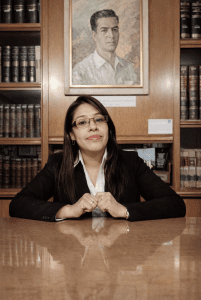 In 2015, Maggaly formally studied Conciliation in Peru and obtained official accreditation authorized by the Ministry of Justice through a formal resolution. She later completed a specialized course in family conciliation, expanding her ability to work with complex interpersonal and family based conflicts. Her academic journey reached a significant milestone with the successful completion of her Law studies at the National University of San Agustín of Arequipa, strengthening her understanding of the legal frameworks that intersect with conflict and justice.
Beyond her formal studies, Maggaly has sought out specialized training across Latin America to deepen her practice. She has completed courses in Library Science, effective communication, and managing difficult conversations through the Mediation Institute of Mexico. She has also undertaken training in technology assisted mediation and negotiation with ODR Latinoamérica in Argentina and recently began formal instruction in Restorative Justice in Mexico. In addition, she holds an accreditation in Cultural Management, which she says has “significantly strengthened my ability to use culture as a bridge and strategic tool in collaborative peacebuilding processes.”
Professionally, Maggaly has served for the past three years as Director of Punto Concilia, an organization dedicated to promoting dialogue and peaceful conflict resolution. From this role, she is currently developing a project planned for 2026 that aims to train new conciliators and peace managers, as well as establish an association under Punto Concilia to further promote peace and conflict resolution. Her institutional motto reflects her guiding philosophy simply and clearly: LET’S TALK.
Her commitment to peacebuilding began long before her professional training. “My engagement in peacebuilding began in childhood,” she recalls. From an early age, she was drawn to dialogue and communication, recognizing that these tools allowed her to resolve conflicts constructively and foster understanding among others. As she grew older, witnessing the persistent presence of violence and conflict in Peru deepened her motivation to contribute to social change, even if that change would come slowly.
A formative experience occurred when she was 12 years old, during an attempted privatization of two public service companies in Peru. In her city, the process generated fear and uncertainty and led to widespread protests as citizens sought to be heard. That moment left her questioning whether society is genuinely listened to by institutional structures, a question that stayed with her for years.
That question resurfaced powerfully during the social unrest that affected southern Peru between December 2022 and February 2023. During this period, police and military forces responded to protests with what she describes as illegitimate use of force, including bullets, tear gas, and rubber and metal pellets. The violence resulted in 50 deaths and hundreds of serious injuries. Witnessing these events revealed to her the deep structural and social factors that allow conflicts to escalate. It also reinforced her commitment to dialogue and peace as essential tools for conflict resolution. “I consciously choose to believe in the construction of a better society,” she says.
Defining peace, Maggaly notes, is complex and deeply contextual. In southern Peru, peace involves restoring social stability after unrest, ending violence, meeting basic needs, defending community rights, and ensuring inclusive development. For her, peace is inseparable from justice, dialogue, and the recognition of rights.
Her peacebuilding work faces significant challenges. One of the most pressing is the limited or absent support from state institutions, which she believes should actively promote dialogue platforms and pacification initiatives. Institutional inaction, combined with widespread public distrust, creates major obstacles. This distrust, she explains, reflects the absence of a deeply rooted culture of peace.
To navigate these challenges, Maggaly places strong emphasis on local dynamics. Culture, history, and politics are central to her strategy. As a cultural manager, she integrates local traditions, historical narratives, and community power structures into her work, fostering social cohesion, resilience, and more authentic processes of conflict transformation.
When asked what success looks like, she distinguishes between immediate and long term outcomes. In the short term, success involves peace consolidation through stronger institutions, inclusive dialogue, social justice, and a reduction in conflict. In the long term, she believes sustainable peace requires education, the development of a culture of peace, and increased participation of women in decision making processes.
Although her understanding of conflict and peace has evolved with context and experience, one principle has remained constant. “Dialogue, in all its forms, is the most effective means of resolving conflict,” she affirms. What gives her hope today is connecting with individuals and organizations committed to rebuilding the social fabric and strengthening the capacity to resolve conflicts peacefully.
Looking ahead, Maggaly remains deeply committed to Punto Concilia and to expanding projects that train peace managers and strengthen conflict resolution capacities. She is particularly motivated by the opportunity to continue contributing to Mediators Beyond Borders International (MBBI), an organization she is proud to be part of. She attended the 11th Global Peace Summit in Lima, Peru as well. Her decision to join MBBI has been driven by her steadfast commitment to lifelong learning and the opportunity to embrace the institution’s global humanitarian vision, strengthening her skills through international synergy. Maggaly is convinced that merging local leadership with a global perspective is the key to building a culture of peace that is deeply human and professionally solid. For her, the possibility of building societies grounded in dialogue is not just an ideal, but a responsibility she carries forward every day.
Article by Shamailah Islam, MBBI Writer