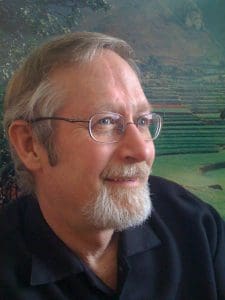
From Engineering to Peacebuilding. Member Spotlight: Dr. Ernest Thiessen
Dr. Ernest Thiessen has spent more than three decades working at the intersection of engineering, decision science, and peacebuilding. As President of Smartsettle Resolutions and iCan Systems Inc., he has dedicated his career to developing negotiation systems that help people resolve complex conflicts and discover solutions that benefit everyone involved.
In this interview, he reflects on how his journey began, the lessons he learned while working overseas with his family, and why collaboration remains at the heart of his work.
What first inspired you to get involved in peacebuilding work?
 My path into peacebuilding didn’t begin in diplomacy or politics. It began in engineering and in a desire to serve communities in meaningful ways.
I studied bioresource engineering at the University of British Columbia and worked for several years at a consulting firm after graduating. During that time, my wife Vanj and I began reflecting on how we wanted our lives and careers to contribute to something larger than ourselves.
That reflection led to a life-changing decision. In the 1980s, we volunteered with Mennonite Central Committee and moved to rural Nepal with our three young children. I worked as an irrigation engineer there for nearly six years, while Vanj immersed herself and our children in village life and taught expatriate children on the project.
Looking back, it was very much a shared journey. The decision to go, the experience of living in a very different society, and the lessons we learned that shaped both of us deeply.
Can you tell me about a moment or experience that shaped your approach to peacebuilding?
Living and working in Nepal was transformative.
At the time, nearly half the population in the project area lived below the poverty line and many rural communities lacked basic infrastructure, clean water, and reliable energy. As development workers who had come from various countries, our approach was to live in the communities we were serving and working with, rather than on compounds…“Our policy was to be spread out. When you live among local people and learn their language, you earn their trust.”
Rather than approaching development as outside experts, we worked closely with local leaders in the farming communities. Listening became just as important as engineering. When you care about people and listen attentively, you begin to find solutions that can work for everyone.
One of the most significant efforts during that time was the Andhi Khola Project, which involved irrigation and hydropower development. It required negotiation and collaboration among many stakeholders – local, federal, and international. Through careful planning, the project ensured that benefits extended even to landless community members. The project team was later honored with the UNESCO International Hydropower Association Blue Planet Prize for its innovative approach and impact.
Vanj and our children were living that experience alongside me, which meant our whole family developed a deeper appreciation for how Nepal’s rural villages function and how trust is built.
That experience left a lasting impression on me. It showed how collaboration can transform, what might otherwise become a conflict, into something constructive.
How did those experiences influence your later work?
The Andhi Khola Project raised some deeper questions for me.
- Why do conflicts persist even when workable solutions exist?
- Why is it so difficult for groups with competing interests to reach agreement?
- How do we facilitate sustainable rural projects?
- How can we encourage governments to collaborate?
Those questions eventually led me to Cornell University, where I pursued a PhD in Water Resource Systems Planning and Analysis.
During my doctoral work, my advisor challenged me with an intriguing question: could we bridge the gap between engineers and decision makers?
Engineers are trained to analyze problems and identify optimal solutions. But decision makers face political realities, competing priorities, and incomplete information. I began to realize that many conflicts remain unresolved because people simply lack the tools that allow them to discover mutually beneficial solutions.
What came out of that research?
My research led to the development of a negotiation concept called Maximize the Minimum Gain.
The idea is to help negotiating parties explore trade-offs in ways that reveal agreements that improve outcomes for everyone involved.
This work attracted attention from leaders in negotiation and decision science. Harvard Professor Emeritus Howard Raiffa described the approach as cutting edge and even stated that he preferred it to a similar concept developed by Nobel laureate John Nash.
But theory alone isn’t enough. Turning those ideas into practical tools took many years and required a great deal of collaboration.
What role has collaboration played in developing Smartsettle?
Collaboration has been essential.
Over the past several decades I’ve worked with a small team of programmers, mathematicians, and colleagues who share a commitment to improving how people negotiate. Together we’ve translated theoretical ideas into algorithms and software systems that can support complex negotiations in real-world settings.
Smartsettle Infinity didn’t emerge from a single breakthrough. It evolved through many iterations, experiments, and contributions from people with different expertise.
I often say that the technology itself reflects the principle it promotes: collaboration. Just as negotiators must work together to discover better solutions, the development of these systems has required teamwork and shared creativity.
And of course, throughout that long process, my family—especially Vanj—has been an active part of the journey with me. Building something like this takes persistence over many years, and that kind of work is never sustained by one person alone.
How does Smartsettle help resolve complex disputes?
When negotiations involve many issues and stakeholders, the number of possible agreements becomes enormous. It can be extremely difficult for people to see where mutually beneficial solutions might exist.
Smartsettle helps participants explore those tradeoffs.
The system operates through a secure neutral platform that allows stakeholders to express their priorities and explore different proposals. The technology analyzes those preferences and identifies agreements that improve outcomes for everyone involved.
In that sense, the technology simply supports what good collaboration already requires—listening carefully, understanding different priorities, and searching for solutions that respect everyone’s interests.
How would you describe your current peacebuilding efforts?
Today we are applying these ideas in many different contexts.
Smartsettle has been used in thousands of cases, both live and simulated. These include small claims disputes, family negotiations, business conflicts, procurement processes, and collective bargaining.
More recently, we have also been exploring applications in environmental cooperation and international negotiations, including simulations related to climate challenges and complex global conflicts.
These kinds of initiatives often involve many partners and collaborators. Universities, international organizations, mediators, and researchers all bring different perspectives to the work.
Peacebuilding at that scale is inherently collaborative.
What future role do you see for technology in peacebuilding?
I believe technology can play an important role in helping societies make better collective decisions.
Many of today’s challenges—whether climate change, resource management, or international conflict—involve many stakeholders with different priorities. Traditional negotiation methods often struggle under that level of complexity.
Technology can help reveal options that might otherwise remain hidden.
Our goal with systems like Smartsettle Infinity is to create tools that help people explore those possibilities together. In that sense, the technology is not replacing human judgment; it is helping people collaborate more effectively.
If we can strengthen that collaborative capacity, I believe we can make real progress on some of the most difficult challenges facing the world today.
What keeps you optimistic about peacebuilding?
Early in your career, you often have very ambitious goals.
When you try things and sometimes fail, it humbles you. But those experiences also strengthen your belief that collaboration is the only real path forward.
Through organizations like Rotary and MBBI, I’ve met many people around the world who genuinely want to make a difference. It’s very encouraging to work with people who share that mindset.
Personally, I remain very optimistic.
I’m a great believer in the good overcoming evil. Progress starts with imagination. You imagine what can be accomplished, you set your sights high, and you keep going.
Article by Shamailah Islam, MBBI Writer