
Full Circle: Listening, Learning, and Leading Through Mediation. Member Spotlight: Clay Francell
Clay Francell’s story begins in Odessa, Texas, USA in the heart of oil country where the pace of life is steady and the sense of community runs deep. He grew up there, attending local schools from elementary through high school, never imagining that one day he would return to those same hallways as a teacher. “It was a full circle moment,” he says, reflecting on his decision to come back and work in the very school that shaped him.
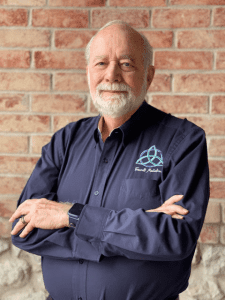 Teaching, for Clay, was never confined to lesson plans. It was rooted in relationships, especially during his time working in a self contained special education behavioral unit. Many of his students were navigating complex challenges, and Clay understood early on that trust had to come first. “I did my best to have equal footing with the kids,” he says. “I was their advocate.” Sometimes that meant sharing parts of his own story, including moments when he had struggled as a student himself. It created a bridge. “They knew I wasn’t talking down to them.”
His work later took him to an elementary magnet school in one of the most economically challenged areas of the district. There, the needs extended beyond academics. With limited counseling resources, Clay often stepped into multiple roles, supporting not just students but staff as well. His academic background in history, with a focus on World War II, combined with a minor in psychology, gave him a strong foundation for understanding both systems and people. Still, it was his ability to listen that set him apart.
That skill had been developing long before he stepped into a classroom. For more than 25 years, Clay was involved with a World War II museum, eventually becoming its director of education. He also worked with a Shakespearean globe theatre and participated in an arts council. These spaces brought together volunteers with different personalities, perspectives, and expectations. “I had to learn quickly how to deal with volunteers,” he recalls. “Issues would come up, and I would sit and mediate without realizing I was a mediator.” Looking back, those experiences feel like early training for the work he would formally step into later.
The transition into mediation came during the uncertainty of the pandemic, after Clay and his wife relocated to Fort Worth. Encouraged by a family member, they both pursued certification and quickly connected with the Texas Association of Mediators. At their first conference, a chance conversation with a membership chair, herself a retired special education teacher, led to immediate involvement. “She recruited us on the spot,” Clay says. “From there, it just took off.”
Today, Clay’s work spans civil mediation in local courts as well as intensive work with youth through juvenile detention programs and truancy cases. In these spaces, his background in education becomes especially powerful. He is often working with young people and their families at moments of tension, particularly in cases involving family conflict or minor offenses. “I’m a facilitative mediator,” he explains. “I sit down with both parties and say, tell me your story, tell me what happened.” At times, especially when conditions are tied to a youth’s release, he may take a more directive approach, but his core philosophy remains grounded in dialogue.
Much of his work focuses on helping families reconnect. In juvenile family violence cases, the stakes are deeply personal. Not every session ends in agreement, but Clay measures success in more than just formal resolutions. He recalls instances where a mediation reached an impasse, only for one of the parties to return weeks later ready to try again. “I had a case where I declared an impasse,” he says. “Three weeks later, they came back and requested mediation again.” For Clay, that willingness to return signals something meaningful has shifted.
Impasses, in fact, are a regular part of the work. Rather than seeing them as failures, Clay approaches them as opportunities to pause and reassess. “There are always multifactors,” he explains. “I try to mitigate all of that and get them on an even plane.” His strategy is grounded in deep listening and thoughtful analysis. “I listen deeply, no matter what kind of mediation it is. I analyze. I think outside the box.” Over time, he has come to believe that even the most difficult moments can open unexpected pathways. “Sometimes that unlocks other doors and other ways to get them help.”
Central to Clay’s practice is the question of trust, especially when working across differences. As a mediator, he is constantly aware of how he is perceived. “I have to prove that I’m neutral, that I know what I’m talking about,” he says. He takes a personal approach, often sharing parts of his own story to build connection while maintaining professional boundaries. His commitment to diversity, equity, and inclusion is reflected in his work with a coalition of mediators from varied backgrounds, including Black, Hispanic and LGBTQ communities. “We believe in each other and we believe in what we are doing as peacekeepers,” he says.
That commitment has also been shaped by mentorship. Clay speaks about learning from colleagues with different cultural perspectives, including a mentor originally from Trinidad who helped him better understand cultural mediation. These experiences have informed how he navigates bias and builds understanding in complex cases. When needed, he collaborates or steps aside to ensure that the right mediator is in place. For him, the goal is always the same: meaningful resolution.
One such resolution stands out. In a case involving three brothers and a restaurant tenant disputing rent payments, tensions were high and positions firmly held. Through careful facilitation, Clay helped the parties reach a compromise, proposing a “wash” of the discrepancy that allowed everyone to move forward. It was, in his words, a transformative mediation. “Those are the ones where it is a transformative mediation,” he says. “It changes how people see each other.”
In both civil and juvenile cases, Clay begins with a clear process. He uses a standard opening statement that outlines expectations, confidentiality, and the role of the mediator. “I come in as a neutral party, to facilitate ideas and work outside the box,” he explains. Whenever possible, he prefers to keep parties in the same room to encourage direct dialogue, though he adapts when situations become too contentious. Often, resolution involves compromise. “A lot of settlements involve parties accepting less than what they originally wanted,” he says. In some cases, he helps structure payment plans that make agreements more realistic and sustainable.
Over time, mediation has reshaped how Clay understands conflict itself. “Mediation has taught me a lot,” he says. “I read a lot.” Drawing on psychology, philosophy, and ongoing training, he continues to refine his approach. At the center of his thinking is a simple but powerful idea. “I want to hear your truth, and both truths can be true.”
Looking ahead, Clay is working toward qualifying as a distinguished mediator through the Texas system, a step that reflects both experience and dedication to the field. He sees growth not just in his own career, but in mediation more broadly. “More mediators,” he says, when asked what gives him hope. The expansion of the field signals a shift toward dialogue and understanding in spaces that often default to conflict.
Still, his greatest sense of purpose comes from working with young people. Whether in schools, court programs, or detention centers, he remains deeply committed to supporting the next generation. “Kids excite me about the future,” he says. “They are our future.” His own grandchildren are a constant reminder of why the work matters. “It’s fulfilling,” he says. “I’ve always enjoyed working with youth.”
In every setting, from classrooms to courtrooms, Clay Francell returns to the same core practice. He listens. He creates space. And he helps people find their way back to one another.
To learn more about Clay and his work please visit his website: https://francellmediations.com/
Article by Shamailah Islam, MBBI Writer