
The Work of Being Human: Law, Listening, and Peace. Member Spotlight: Kirsten Mercer
Kirsten Mercer lives and works in Toronto, Ontario, where her professional life unfolds at the intersection of law, mediation, politics, and human rights. Called to the bar in Ontario in 2007, she built a career shaped less by titles than by a steady pull toward understanding how decisions are made and how conflict can be resolved in ways that leave people feeling heard, supported, and empowered.
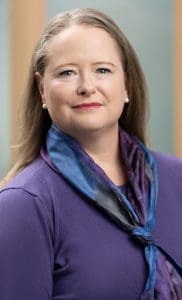 She is both a practicing lawyer and an adjudicator with the Canadian Human Rights Tribunal, based in Ottawa. Her mediation work takes place largely within the tribunal context, where she serves as a mediator on certain files, often those requiring a careful and trauma informed approach. In private practice, her work focuses on human rights in the employment context and on cases involving gender based violence. What draws her to this work is its immediacy. As she puts it, “I really like the combination of working directly with clients and learning about the issues they are living with on the ground.”
Law is not always the obvious destination. Before becoming a lawyer, Kirsten worked in international development, and when she began law school, her intention was to return to that field. The practice of law itself is something she grew into over time. “I was always one of those kids that people looked at and said, oh you’re going to be a lawyer someday,” she says, laughing. “But I wasn’t really into law until graduate school. That’s when I realized I liked the practice of law.” What consistently interests her is not argument for its own sake, but process. “I’ve always been someone who’s been interested in how decisions get made.”
Her career reflects that curiosity. In addition to her legal practice, Kirsten spent years working in politics, including serving as a senior advisor to the Premier of Ontario and later as Chief of Staff to the Attorney General of Canada. Much of that work, she observes, is mediation by another name. “Politics is a lot of mediation,” she says. “It’s holding space for competing dialogues, understanding the needs of all the players at the table, and trying to broker the best path forward for those most impacted.” Even when the answer is no, she believes the process still matters. “People need to feel heard, even if the outcome doesn’t go their way. For peace to hold, people need to believe in the outcome.”
After a period as a full time adjudicator, Kirsten returned to legal practice in 2019 while continuing her adjudication work part time. The through line in all of it is a desire to resolve conflict in systems that often seem designed to prolong it. “The biggest challenge is being someone who is looking for resolution in a system that promotes conflict,” she says. She points to persistent access to justice issues, especially in civil and human rights systems where legal aid is limited or nonexistent. For many clients, the system itself feels inaccessible and overwhelming.
The substance of the work adds another layer of difficulty. Human rights cases and work involving gender based violence are heavy, emotionally and morally. “The difficult part of my job is knowing what should happen and getting the system to produce that result,” she says. In cases involving survivors of violence, she is acutely aware of the gap between what the legal system can offer and what justice might actually mean to the person sitting across from her. “Survivors deserve all of the options we can give them for meaningful paths to justice,” she says, emphasizing that punishment is not always the primary goal. Often, clients are motivated by a desire to minimize harm or prevent future violence.
Her approach is deliberately client centered. Culture, history, and politics shape every file, but they do so through the lived experience of the person involved. “It’s important to listen to clients in terms of where they are coming from and what informs their experiences,” she says. “My job is to facilitate what a client is looking for, being in a posture of listening carefully.” She is clear that her role is not to impose her own sense of the right outcome. “Their version of agency and accountability needs to drive the analysis, not what I think the right outcome is or what I think they should do.”
For Kirsten, success is not defined by winning or losing a case. “I find myself focused on what the solution is,” she says. She describes success as having two facets. One is doing everything possible to minimize harm and ensure clients feel supported throughout the process. The other is helping them reach an outcome they feel good about, whatever that looks like for them. At its core, she explains, the work is about empowering people to feel like agents in what is happening, rather than passengers in a system moving too fast and speaking in a language that is not theirs.
Trust is foundational to that work, but it is not something she takes for granted. “With clients, that trust is built every time,” she says. “You have to build it and hold it every time.” That means recognizing that, for the person in front of her, this issue may be the most important thing in their life at that moment. It also means showing up as a human being. “What it comes down to is being human and honoring where people are coming from,” she says.
Working with youth and marginalized communities is a particularly energizing part of her career. Youth work, she says, brings a sense of possibility and momentum. At the same time, she is thoughtful about her role as a white woman in spaces shaped by histories of exclusion and harm. “It’s something I think about, holding space and understanding what work needs to happen,” she says. Often, that means stepping back and allowing communities to define their own paths forward. “It’s about holding the space for people to figure out what that path needs to be.”
Over time, her perspective on conflict shifted. “I’ve become impatient with conflict for conflict’s sake,” she says. She is increasingly focused on resolution, while also accepting that resolution does not always follow a straight line. “Sometimes you have to let the resolution of the dance unfold.”
Despite the challenges, Kirsten remains hopeful. “Most people can resolve most things given the space and support,” she says. What gives her hope are processes that bring people closest to the ground together and allow them to be human with one another, rather than abstract symbols in someone else’s framework.
Looking ahead, she sees Canada at an inflection point in its response to gender based violence. She notes a growing sense of collective responsibility and urgency over the past decade, particularly around issues such as missing and murdered Indigenous women. Progress is uneven, but it is real. Her hope is grounded not only in policy shifts, but in grassroots peacebuilding and the leadership of marginalized groups driving change.
On a personal level, she also finds hope at home. As a mother of two boys, the awareness and values she is able to instill in them matter deeply to her. It is a reminder that peacebuilding is not only something that happens in courtrooms, tribunals, or negotiation rooms, but in everyday conversations and relationships. For Kirsten Mercer, that belief continues to guide her work, anchoring a career dedicated to resolution, dignity, and the quiet power of being heard.
Article by Shamailah Islam, MBBI Writer