Different is Beautiful. Member Spotlight: Jennifer Nackos
Jennifer Nackos knows there’s no such thing as a perfect mediator. This, however, won’t stop her from trying. She explains her routine before every session: “I imagine that I’m walking through a screen door and filtering out all of my biases and my opinions, all of the things that could take an effect on the kind of mediator that I am.” And then, after the session, “I can go back out the screen door and pick up all my things to take with me–or maybe I can leave some behind because of what I experienced in mediation.” Jennifer’s empathy, open-mindedness and gratitude grants her a purer perspective than most. With a soft yet strong voice, she imparts our conversation with valuable insights on the state of mediation and peacebuilding today.
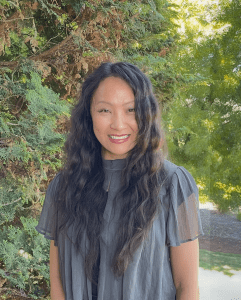 Jennifer’s background reveals a love for that which is different. She has always been drawn to the Russian language and culture, in part for its mysterious, hard-to-crack beauty. But crack it she did, so much so that Jennifer’s Church sent her to Ukraine in 1995. There, she did community service in the Donetsk and Kharkiv regions for a year and a half. Jennifer observed how “the Russians and Ukrainians were quite interwoven culturally.” She learned about Slavic culture firsthand, meeting friends that she is still in contact with today.
But Jennifer is deeply saddened by the current conflict. She reflects on how “the war is about both Ukraine and Russia’s need for sovereignty and safety,” and that “their concern is the same.” Such concerns, however, are in conflict with each other. “They are leaning on their differences to feel safer,” Jennifer says. “And Ukrainians have now withdrawn their identity from Russia.” These once-closely tied cultures are extremely strained, causing Jennifer to reflect on the importance of intercultural communication.
To Jennifer, being “interculturally fluent” means understanding the prominent norms of different cultures. This includes not only countries and languages, but also the unique traditions and knowledge within each state, religion, lifestyle, family and even personality. Jennifer sees this type of fluency as a necessity, especially when living in the United States. And for her, it has come somewhat naturally.
Jennifer was born in South Korea but raised by her adoptive parents in America. When her parents divorced, Jennifer split her time between states, moving from North Dakota and Utah, among others. From a young age, Jennifer learned how to adapt to each new school and living situation. This made her passionate about educating across differences. “Humans are hard-wired to fear difference,” Jennifer explains, especially when they are in survival mode. But if we are able to keep an open mind and set a positive example, “all the little pieces can add up” to a greater image of peace.
Jennifer completed a bachelor’s degree in Russian literature and language at Portland State University. While pursuing it, she came across Conflict Resolution and “fell in love” with the field. In fact, she decided to complete a master’s degree and become a certified mediator and Restorative Justice facilitator. Jennifer describes what conflict resolution means to her:
“We take conflict and dissect it, pull up all the different pieces and analyze them. We rotate them around and look at them from different perspectives–might even interchange them a bit. And then, hopefully, we put it back together in a better way.”
While interning with Clackamas County Resolution Services in Oregon, Jennifer contributed to equity-informed mediation training for the community. This meant reaching out to different groups of people (senior citizens, Slavic enclaves, Asian communities, the LGBTQ+ community) and educating about ways to recognize, identify and address power dynamics and trauma in mediation. Jennifer is dedicated to understanding the full background of those involved in a conflict, as this helps to better serve both sides.
Now based in Portland, Oregon, Jennifer serves on the Board of Directors for the Oregon Mediation Association (OMA). She recently co-chaired its first in-person conference since COVID. The theme was “homecoming,” and Jennifer helped create a program rich with workshops, plenaries, networking and even a keynote speech by MBBI’s own Kenneth Cloke. Jennifer plays a highly connective role at the Association, spreading OMA’s methods and values to other mediation organizations in the state.
Jennifer is looking forward to getting more involved with MBBI, specifically the organization’s work with Ukraine. With her strong foundation in intercultural relations and conflict resolution, Jennifer brings a hopeful and positive attitude to the field of peacebuilding. As Jennifer says, “We’re going to have conflict, so how can we do it well?” In a world ripe with such conflict, Jennifer is poised to fight for peace and bridge differences.
Article by Elsie Aleck, MBBI Writer